



What Infections Cause High CRP? Complete Guide by Tieten Medicity Hospital
Introduction to CRP (C-Reactive Protein)
C-Reactive Protein (CRP) is one of the most important indicators doctors use to understand what is happening inside your body. It is a protein produced by the liver and released into the bloodstream when there is inflammation. In simple terms, CRP acts like an “alarm signal” — when something is wrong, especially an infection, CRP levels rise quickly.
If you are searching for what infections cause high CRP, you are likely dealing with a health concern or trying to understand a recent blood test report. This is very common. Many patients come to hospitals worried after seeing high CRP levels in their reports without knowing what it actually means.
At Tieten Medicity Hospital, CRP testing is routinely used to detect infections early, monitor treatment progress, and guide doctors in choosing the right therapy. Whether the cause is bacterial, viral, fungal, or parasitic, CRP helps narrow down the diagnosis and determine severity.
Unlike some other tests that take time, CRP rises within hours of inflammation, making it a reliable and fast marker. However, it is important to understand that CRP itself does not tell the exact disease—it only signals that inflammation exists. That’s why doctors always combine CRP results with symptoms, physical examination, and other tests.
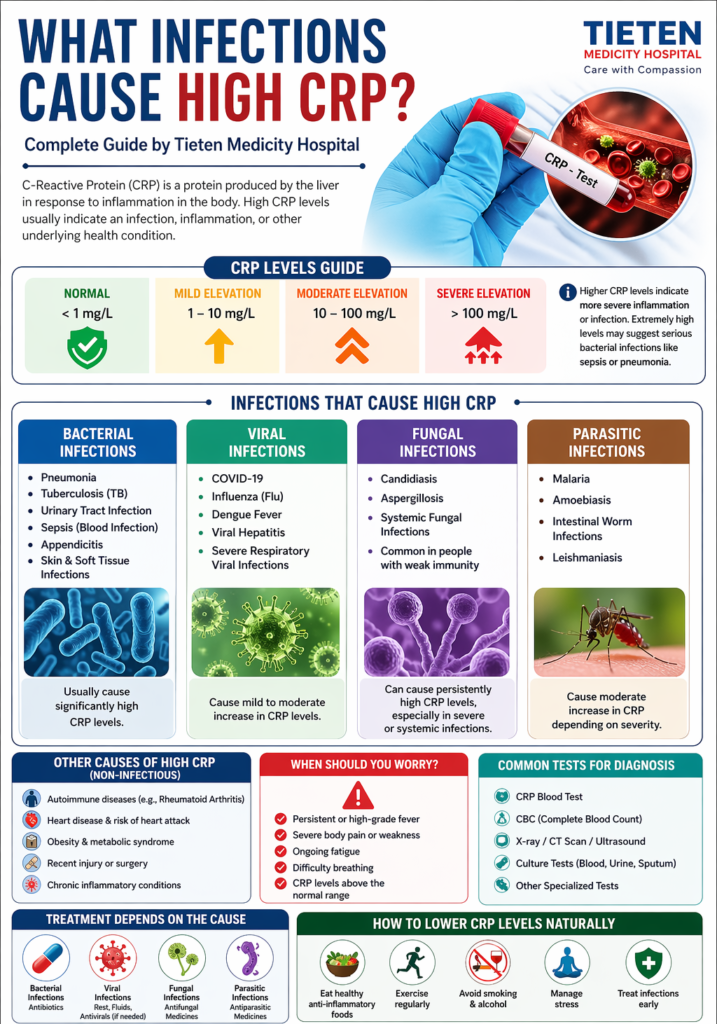
What is a Normal CRP Level?
Understanding normal CRP levels is essential before interpreting high values. In healthy individuals, CRP levels are generally very low.
- Normal CRP level: Less than 1 mg/L
- Mild elevation: 1–10 mg/L
- Moderate elevation: 10–100 mg/L
- Severe elevation: Above 100 mg/L
A slight increase may occur due to minor infections, stress, or even after exercise. However, when CRP levels rise significantly, especially above 10 mg/L, it often indicates infection or inflammation that requires medical attention.
Extremely high CRP levels (above 100 mg/L) are usually associated with serious bacterial infections such as bloodstream infections or severe pneumonia. In such cases, immediate medical intervention is necessary.
Doctors also use CRP trends rather than a single value. For example, if CRP decreases after treatment, it means the body is responding well. If it remains high or increases, further investigation is needed.
Why CRP Increases During Infections
When your body detects harmful organisms like bacteria or viruses, the immune system activates a defense response. White blood cells release chemical signals called cytokines, which trigger the liver to produce CRP.
CRP plays several roles:
- It helps identify and bind harmful bacteria
- It activates the immune system
- It supports the removal of dead cells
- It promotes healing
The level of CRP depends on the severity of inflammation. Mild infections cause a small rise, while severe infections can cause a rapid and significant increase.
This is why CRP is widely used in hospitals—it gives a quick idea of how serious an infection is and whether urgent treatment is needed.
Types of Infections That Cause High CRP
Bacterial Infections
Bacterial infections are the most common and significant cause of high C-reactive protein (CRP) levels. When bacteria invade the body, the immune system responds aggressively, leading to a sharp increase in CRP production by the liver.
These infections typically cause very high CRP levels, often indicating acute inflammation or a serious condition.
Common examples include:
- Respiratory infections – Pneumonia, bronchitis, lung abscess
- Urinary tract infections (UTI) – Kidney infection (pyelonephritis), bladder infection
- Abdominal infections – Appendicitis, gallbladder infection (cholecystitis), intestinal infections
- Skin and soft tissue infections – Cellulitis, abscess
- Bloodstream infections – Sepsis (a life-threatening condition)
In severe bacterial infections like sepsis, CRP levels can rise very rapidly and reach extremely high values, requiring urgent medical care. Doctors often use CRP along with other tests (like CBC and blood culture) to confirm the diagnosis and monitor treatment response.
Viral Infections
Viral infections can also increase CRP levels, but usually to a lesser extent compared to bacterial infections. However, in some cases, CRP may rise moderately or even significantly, especially in severe viral illnesses.
Common viral infections associated with raised CRP:
- Influenza (flu)
- Dengue fever
- COVID-19
- Viral hepatitis
- Severe respiratory viral infections
CRP is often used by doctors to help differentiate between bacterial and viral infections:
- Mild to moderate CRP elevation → more likely viral
- Very high CRP levels → more suggestive of bacterial infection
However, this is not always definitive, and clinical evaluation is essential.
Fungal Infections
Fungal infections are less common but can lead to persistently high CRP levels, especially in individuals with weakened immune systems.
High-risk groups include:
- Diabetic patients
- Cancer patients undergoing chemotherapy
- ICU patients
- Patients on long-term steroids or immunosuppressive drugs
Common fungal infections include:
- Lung infections (e.g., aspergillosis)
- Blood infections (fungemia)
- Oral or systemic candidiasis
These infections can be serious and difficult to diagnose, and CRP is often used as a marker to track inflammation and response to antifungal treatment.
Parasitic Infections
Parasitic infections are especially common in tropical and developing countries like India and can also cause elevated CRP levels due to ongoing inflammation in the body.
Common parasitic infections include:
- Malaria
- Amoebiasis
- Intestinal worm infections
- Leishmaniasis
These infections often present with:
- Fever
- Weakness
- Abdominal pain
- Diarrhea
CRP levels may be moderately elevated, depending on the severity and duration of the infection. In diseases like malaria, CRP can rise significantly during acute episodes.
Common Bacterial Infections Associated with High CRP
Certain bacterial infections are known to cause significantly elevated C-reactive protein (CRP) levels, often indicating acute inflammation or a serious underlying condition. Understanding these infections helps in early diagnosis and timely treatment.
Pneumonia
Pneumonia is a serious bacterial lung infection that leads to inflammation of the air sacs (alveoli), which may fill with fluid or pus.
Common symptoms include:
- High fever and chills
- Persistent cough (with mucus)
- Chest pain (worsens while breathing or coughing)
- Shortness of breath
- Fatigue and weakness
In bacterial pneumonia, CRP levels can rise very high, often above normal ranges, reflecting the severity of infection. Doctors frequently use CRP along with chest X-rays and blood tests to confirm diagnosis and monitor recovery.
Severe cases may require hospitalization, oxygen support, or intravenous antibiotics.
Tuberculosis
Tuberculosis (TB) is a chronic bacterial infection caused by Mycobacterium tuberculosis, most commonly affecting the lungs but also other organs.
Symptoms may include:
- Persistent cough lasting more than 2–3 weeks
- Weight loss
- Night sweats
- Low-grade fever
- Blood in sputum (in advanced cases)
Unlike acute infections, CRP levels in TB are usually moderately elevated but remain high over a long period, reflecting ongoing inflammation. It is commonly used along with ESR, sputum tests, and imaging for monitoring disease progression.
TB requires long-term antibiotic therapy (usually 6 months or more).
Urinary Tract Infection
Urinary tract infections (UTIs) are common bacterial infections affecting the bladder, urethra, or kidneys.
Symptoms include:
- Burning sensation during urination
- Frequent urge to urinate
- Lower abdominal pain
- Cloudy or foul-smelling urine
In mild UTIs, CRP may be slightly elevated. However, in severe infections like kidney infection (pyelonephritis), CRP levels can rise significantly, indicating deeper infection and inflammation.
Untreated UTIs can spread and lead to complications, so early antibiotic treatment is essential.
Sepsis
Sepsis is a life-threatening condition that occurs when a bacterial infection spreads into the bloodstream, triggering a widespread inflammatory response.
Warning signs include:
- Very high or low body temperature
- Rapid heart rate
- Rapid breathing
- Confusion or disorientation
- Low blood pressure
CRP levels in sepsis are often extremely high, making it a critical marker for identifying severe infection. Immediate medical attention is required, usually in an ICU setting.
Treatment involves:
- Emergency IV antibiotics
- Fluids and supportive care
- Monitoring of vital organs
Appendicitis
Appendicitis is the inflammation of the appendix, usually caused by bacterial infection due to blockage.
Typical symptoms include:
- Sudden pain starting near the navel and shifting to the lower right abdomen
- Nausea and vomiting
- Fever
- Loss of appetite
CRP levels increase as inflammation worsens, and when combined with elevated white blood cells, it strongly suggests appendicitis.
If not treated on time, the appendix can rupture, leading to serious complications. The standard treatment is surgical removal of the appendix (appendectomy).
Viral Infections That May Elevate CRP
Viral infections typically cause a mild to moderate rise in C-reactive protein (CRP). However, in severe cases, CRP levels can increase significantly due to intense inflammation in the body.
COVID-19
COVID-19 is a respiratory viral infection that can range from mild illness to severe complications.
Key symptoms include:
- Fever and dry cough
- Shortness of breath
- Loss of taste or smell
- Fatigue and body aches
In moderate to severe COVID-19 cases, CRP levels often rise significantly due to a strong inflammatory response, sometimes referred to as a cytokine storm. High CRP in COVID patients is associated with:
- Lung involvement
- Increased severity
- Need for hospitalization
Doctors use CRP levels to monitor disease progression and treatment response.
Influenza
Influenza (flu) is a common viral infection affecting the respiratory system.
Symptoms include:
- Fever and chills
- Sore throat
- Muscle aches
- Cough and fatigue
CRP levels in influenza are usually mildly to moderately elevated, helping doctors differentiate it from bacterial infections. Most cases resolve with rest, hydration, and symptomatic treatment, but high-risk individuals may require antiviral medications.
Dengue Fever
Dengue is a mosquito-borne viral infection common in tropical countries like India.
Symptoms include:
- High fever
- Severe headache
- Joint and muscle pain (“breakbone fever”)
- Low platelet count
CRP levels in dengue can vary depending on severity:
- Mild dengue → moderate CRP rise
- Severe dengue (with complications) → higher CRP levels
Monitoring CRP along with platelet count helps doctors assess disease progression.
Fungal Infections Linked to High CRP
Fungal infections can cause persistently elevated CRP, especially in individuals with weakened immune systems.
Candidiasis
Candidiasis is caused by Candida species and can affect the mouth, skin, or bloodstream.
Risk factors include:
- Diabetes
- Long-term antibiotic use
- Weak immunity
CRP levels may rise in systemic or severe infections, indicating widespread inflammation.
Aspergillosis
Aspergillosis is a fungal infection that mainly affects the lungs.
Common in:
- ICU patients
- Individuals with chronic lung disease
- Immunocompromised patients
CRP levels can be significantly elevated, especially in invasive forms, making early diagnosis and antifungal treatment critical.
Parasitic Infections and CRP Levels
Parasitic infections are common in tropical regions and can lead to moderate to high CRP levels.
Malaria
Malaria is caused by Plasmodium parasites transmitted through mosquito bites.
Symptoms include:
- High fever with chills
- Sweating
- Headache and fatigue
CRP levels are often elevated during acute infection, reflecting systemic inflammation.
Amoebiasis
Amoebiasis affects the intestines and sometimes the liver.
Symptoms include:
- Abdominal pain
- Diarrhea (sometimes with blood)
- Fever
CRP levels rise due to intestinal inflammation, especially in severe cases like liver abscess.
CRP Levels in Mild vs Severe Infections
CRP levels are a valuable indicator of infection severity:
- Mild infections → Slight increase in CRP
- Moderate infections → Noticeable elevation
- Severe infections → Very high CRP levels
Higher CRP levels often indicate:
- Severe infection
- Greater inflammation
- Possible need for hospitalization
Doctors use CRP trends (rising or falling) to track recovery and guide treatment decisions.
Which Medical Specialist Should You Consult?
Choosing the right doctor ensures faster diagnosis and proper treatment:
- General Physician – First point of contact for fever, infection, and CRP evaluation
- General Surgeon – For conditions like appendicitis, abscess, or abdominal infections
- Gynecologist – For infections related to female reproductive health
- Infectious Disease Specialist – For complex, recurrent, or severe infections
At Tieten Medicity Hospital, a multidisciplinary team works together to diagnose and treat all types of infections efficiently.
Other Causes of High CRP (Non-Infectious)
High CRP is not always due to infection. It can also be caused by:
- Autoimmune diseases (like rheumatoid arthritis)
- Heart disease and risk of heart attack
- Obesity and metabolic syndrome
- Recent injury or surgery
- Chronic inflammatory conditions
This is why proper diagnosis is essential before starting treatment.
When Should You Worry About High CRP?
You should seek medical attention if you experience:
- Persistent or high-grade fever
- Severe body pain or weakness
- Ongoing fatigue
- Difficulty breathing
- CRP levels above the normal range
Ignoring high CRP can delay diagnosis of serious conditions like sepsis, pneumonia, or severe infections.
Diagnosis and Tests for High CRP
Doctors rely on multiple investigations to identify the exact cause:
- CRP blood test – Measures inflammation level
- CBC (Complete Blood Count) – Checks infection indicators
- X-ray / CT scan / Ultrasound – Detects internal infection
- Culture tests (blood, urine, sputum) – Identifies the organism
These tests help in accurate diagnosis and targeted treatment.
Treatment Options Based on Infection Type
Treatment depends entirely on the underlying cause:
- Bacterial infections → Antibiotics
- Viral infections → Rest, fluids, antiviral medication (if needed)
- Fungal infections → Antifungal drugs
- Parasitic infections → Antiparasitic medications
Early and correct treatment helps in faster recovery and prevents complications.
How to Lower CRP Levels Naturally
While medical treatment is essential, certain lifestyle changes can support recovery:
- Eat a healthy anti-inflammatory diet (fruits, vegetables, whole grains)
- Engage in regular physical activity
- Avoid smoking and alcohol
- Manage stress effectively
- Treat infections early
These habits help reduce overall inflammation and improve health.
FAQs About High CRP and Infections
Can viral infections cause high CRP?
Yes, but usually lower than bacterial infections unless the condition is severe.
Is high CRP dangerous?
It depends on the cause. Severe infections can be life-threatening if untreated.
How long does CRP remain high?
CRP levels usually decrease once the underlying infection or inflammation is treated.
Conclusion
Understanding what infections cause high CRP is essential for early diagnosis and effective treatment. CRP is a powerful marker that helps doctors detect inflammation and assess how severe an infection is.
Whether caused by bacteria, viruses, fungi, or parasites, timely medical care is crucial to prevent complications and ensure quick recovery.
At Tieten Medicity Hospital, advanced diagnostic tools and experienced doctors provide accurate CRP evaluation and personalized treatment plans, helping patients recover safely and efficiently.
