



Laparoscopic vs Robotic Surgery: Differences, Benefits and Recovery
Introduction: Understanding Modern Surgical Techniques
Medical science has made significant progress in surgical treatment, giving patients access to different approaches designed to treat medical conditions effectively while minimizing surgical trauma wherever possible. Laparoscopic surgery and robotic-assisted surgery are two important developments in minimally invasive surgery that have changed the way many abdominal, pelvic and other surgical procedures are performed.
For patients considering surgery, understanding the difference between laparoscopic and robotic surgery can help them prepare for consultations and make informed decisions with their doctors. Both approaches generally use small incisions, specialized instruments and a camera to help surgeons operate inside the body. However, the instruments, visualization systems and methods of controlling surgical tools differ.
At Tieten Medicity Hospital in Thane, patients can seek medical guidance about their symptoms, diagnosis and available treatment options. The most appropriate surgical technique depends on the medical condition, the complexity of the procedure, the patient’s overall health and the operating surgeon’s experience.
Whether you are exploring laparoscopic surgery in Thane, comparing robotic surgery with conventional surgery, or looking for information about surgical recovery, learning about the available approaches is an important first step.
What Is Laparoscopic Surgery?
Laparoscopic surgery, also known as keyhole surgery or minimally invasive surgery, is a technique in which a surgeon performs an operation through small incisions rather than a large surgical opening.
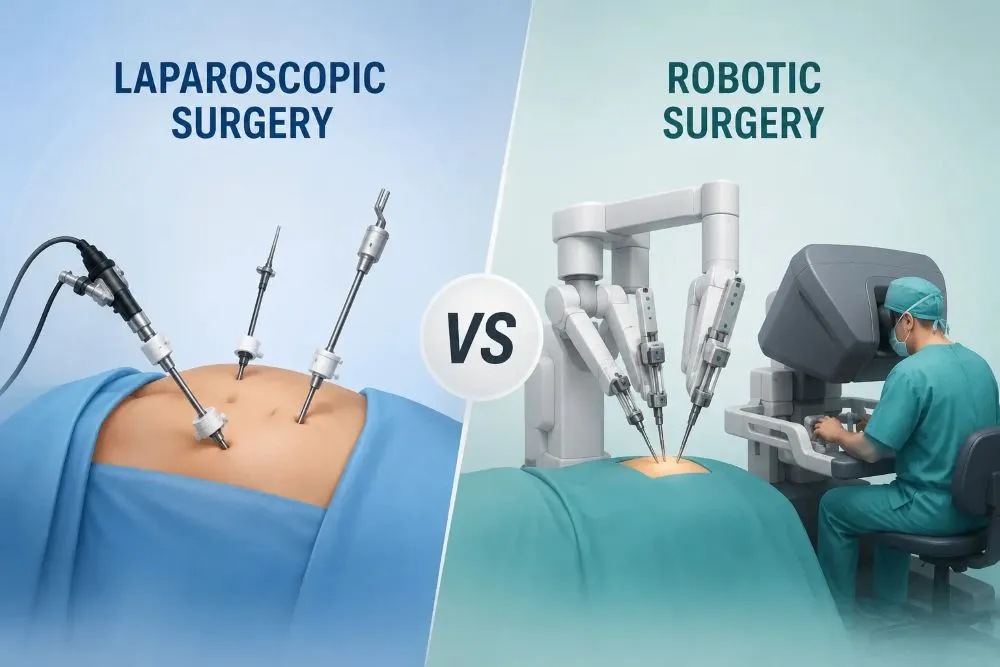
A thin instrument called a laparoscope contains a camera and light source. It allows the surgeon to view the inside of the body on a monitor while using specialized instruments inserted through other small incisions.
Laparoscopic surgery is widely used for selected procedures involving the abdomen and pelvis. Depending on the diagnosis, it may be considered for gallbladder removal, hernia repair, appendectomy, certain gynecological procedures and other abdominal operations.
Benefits of Laparoscopic Surgery
Smaller incisions: Small surgical openings may reduce wound size and visible scarring compared with conventional open surgery.
Potentially less postoperative discomfort: Many patients experience less pain following minimally invasive surgery than after comparable open procedures, although the amount of pain varies.
Shorter hospital stay: Selected laparoscopic procedures allow patients to leave the hospital sooner than open surgery.
Earlier return to daily activities: Recovery may be quicker when the procedure is suitable for a minimally invasive approach and no complications occur.
Reduced wound-related complications: Smaller incisions may reduce certain wound-related risks, although infection and other surgical complications remain possible.
Laparoscopic surgery is an established technique, but it is not appropriate for every patient. Previous abdominal operations, severe inflammation, complex anatomy and other clinical factors may influence the surgeon’s decision.
What Is Robotic-Assisted Surgery?
Robotic-assisted surgery is a form of minimally invasive surgery in which a trained surgeon controls specialized instruments attached to a robotic system.
The robotic platform typically includes a surgeon’s console, a camera system and instrument-carrying robotic arms. The surgeon controls the instruments in real time rather than allowing a robot to perform the operation independently.
Robotic systems can provide magnified three-dimensional visualization and instruments with additional flexibility. These features may be useful during selected complex procedures, particularly when operating in confined anatomical spaces or performing delicate suturing.
Robotic-assisted surgery is used in several specialties, including urology, gynecology and selected general surgical procedures. Its suitability depends on the operation being considered and whether the required technology and trained surgical team are available.
Potential Benefits of Robotic-Assisted Surgery
Three-dimensional visualization: The surgeon may benefit from a magnified view that provides a better perception of depth.
Flexible surgical instruments: Articulated instruments can move in ways that may be difficult to reproduce using conventional straight laparoscopic instruments.
Controlled movements: The system translates the surgeon’s hand movements into instrument movements and may filter out natural hand tremors.
Support for complex procedures: The additional dexterity may be helpful for selected operations involving delicate dissection or suturing.
Minimally invasive access: Like conventional laparoscopy, robotic-assisted procedures generally use small incisions.
These advantages do not mean robotic surgery is automatically safer, faster or more effective for every operation. The surgeon’s experience and the patient’s specific condition remain essential considerations.
Laparoscopic vs Robotic Surgery: Key Differences
- Surgical Instruments and Technology
During laparoscopic surgery, the surgeon directly manipulates long, specialized instruments inserted through small incisions.
During robotic-assisted surgery, the surgeon controls instruments attached to robotic arms from a console. The instruments may offer greater articulation, which can help with particular movements and suturing tasks.
Both techniques require the surgeon to make decisions and control the procedure.
- Visualization During Surgery
Conventional laparoscopy commonly uses a camera to display the operative field on a monitor. The visualization system depends on the equipment used.
Robotic systems generally provide a magnified three-dimensional view, which may help the surgeon appreciate depth and identify anatomical structures during selected procedures.
The clinical value of this difference varies according to the operation and the surgeon’s technique.
- Precision and Instrument Control
Laparoscopic instruments provide effective control for many routine and complex operations. However, their relatively straight design can limit instrument movement in certain anatomical locations.
Robotic instruments may offer additional wrist-like movement and controlled motion scaling. These features can be useful when operating in narrow spaces, but they do not eliminate surgical risks or guarantee better outcomes.
- Pain and Recovery Time
Both laparoscopic and robotic-assisted surgery can offer recovery advantages compared with open surgery when a minimally invasive approach is appropriate.
The patient’s recovery depends on the type of operation, the extent of tissue treatment, pre-existing medical conditions and whether complications occur.
It is not accurate to assume that robotic surgery always causes less pain or provides a faster recovery than laparoscopic surgery. Research comparing these techniques has found that differences vary between procedures.
- Cost of Treatment
Laparoscopic surgery generally uses established equipment and may be less expensive than robotic-assisted surgery.
Robotic procedures can involve additional equipment, maintenance, consumables and operating costs. The total cost also depends on the hospital, surgeon, length of stay, investigations and complexity of treatment.
Patients should request an individualized estimate and ask what is included in the quoted amount before proceeding.
- Availability and Surgeon Expertise
Laparoscopic surgery is available across a broad range of hospitals and surgical departments. Robotic-assisted surgery requires access to a suitable robotic platform and a surgical team trained to use it.
The availability of a particular technique should be confirmed directly with the treating hospital. Patients should also ask about the surgeon’s experience with the specific operation being recommended.
Which Is Better: Laparoscopic or Robotic Surgery?
There is no single answer that applies to every patient.
Laparoscopic surgery may be an excellent option for many common procedures because it is well established and can provide effective treatment with small incisions.
Robotic-assisted surgery may offer additional technical advantages for selected procedures requiring enhanced instrument flexibility or precise suturing in confined spaces.
The decision should consider:
- The type and severity of the medical condition.
- Whether minimally invasive surgery is appropriate.
- The complexity of the planned operation.
- The surgeon’s training and experience with each technique.
- The patient’s medical history and previous operations.
- The expected benefits, risks and recovery requirements.
- The overall cost and availability of the procedure.
A qualified surgeon can explain the differences in the context of the patient’s diagnosis rather than recommending a procedure simply because it uses newer technology.
Medical Conditions That May Be Treated With Minimally Invasive Surgery
Depending on the diagnosis, the surgeon’s expertise and available facilities, minimally invasive surgical approaches may be considered for several conditions.
Gallbladder Problems
Gallstones can cause abdominal pain, nausea and complications such as inflammation of the gallbladder. Laparoscopic cholecystectomy, or gallbladder removal, is a commonly performed minimally invasive operation for appropriate patients.
The surgeon determines the safest approach based on the severity of inflammation and the patient’s medical condition.
Appendicitis
Appendicitis is inflammation of the appendix and may require urgent surgical treatment. Laparoscopic appendectomy is a commonly used approach for suitable patients.
Prompt medical evaluation is important when abdominal pain worsens, especially when accompanied by fever, nausea or vomiting.
Hernia
A hernia occurs when tissue pushes through a weakened area of muscle or connective tissue. Depending on the type of hernia and patient characteristics, repair may be performed using open, laparoscopic or robotic-assisted techniques.
The appropriate method depends on factors such as the hernia’s location, size, previous repairs and the surgeon’s experience.
Gynecological Conditions
Some women with uterine fibroids, endometriosis or other gynecological conditions may require surgery when medication or other treatments are insufficient.
Laparoscopic or robotic-assisted approaches may be appropriate for selected patients, depending on the specific procedure, fertility goals and clinical findings.
Other Abdominal Conditions
Minimally invasive surgery may also be used for selected gastrointestinal and abdominal procedures. However, not every condition can be treated through small incisions, and open surgery may sometimes be the safer or more appropriate choice.
Patients should consult a qualified specialist to understand which options apply to their particular diagnosis.
What Is the Recovery Time After Laparoscopic or Robotic Surgery?
Recovery varies considerably from one operation to another. A straightforward minimally invasive procedure may allow a relatively quick return to daily activities, while major abdominal or pelvic surgery may require several weeks of recovery.
The recovery process may include:
- Following the surgeon’s instructions for wound care.
- Taking prescribed medication as directed.
- Gradually increasing walking and other physical activity.
- Avoiding heavy lifting until medically cleared.
- Attending scheduled follow-up appointments.
- Following dietary advice when relevant to the operation.
Patients should contact their healthcare provider if they develop fever, worsening pain, persistent vomiting, increasing redness around an incision or other concerning symptoms. Severe symptoms require prompt medical assessment.
Do not compare recovery timelines without considering the exact operation performed. The expected recovery after a minor laparoscopic procedure can be very different from recovery after major reconstructive surgery.
Risks and Possible Complications
Laparoscopic and robotic-assisted procedures are surgical operations, so neither is completely risk-free.
Possible complications include bleeding, infection, blood clots, reactions to anaesthesia and injury to nearby organs or blood vessels. Some patients may also require conversion to open surgery if the surgeon determines that continuing through a minimally invasive approach is not safe.
Robotic-assisted surgery adds technology-specific considerations, including equipment availability and the need for a properly trained team. The overall risks depend on the operation and the patient’s health.
Before surgery, patients should discuss the expected benefits, potential complications, alternative treatments and the possibility of additional procedures with their surgeon.
Why Consider Tieten Medicity Hospital in Thane for Surgical Consultation?
Choosing the right hospital for surgical care involves more than comparing laparoscopic and robotic technology. Patients also need an accurate diagnosis, clear communication, appropriate investigations and a treatment plan based on their individual medical needs.
Tieten Medicity Hospital in Thane is an option for patients seeking medical consultation and guidance about their health concerns and possible treatment pathways.
When discussing surgery with the treating team, patients should ask about:
- The investigations needed to confirm the diagnosis.
- Whether medication or non-surgical treatment is appropriate.
- The available surgical techniques for the condition.
- The qualifications and experience of the proposed surgeon.
- The expected recovery period and follow-up plan.
- The estimated treatment cost and possible additional expenses.
If you are considering laparoscopic surgery in Thane or wish to understand whether robotic-assisted surgery is appropriate, confirm which procedures are currently available at the hospital and whether the required specialist and equipment are provided.
For hospital information and consultation enquiries, visit Tieten Medicity Hospital.
How to Prepare for a Surgical Consultation
Preparing for a consultation helps patients make better-informed decisions.
Bring previous medical reports, imaging results, prescriptions and details of any earlier surgeries. Tell the doctor about your current medications, allergies, existing health conditions and any previous complications related to anaesthesia.
Consider asking the following questions:
- What is causing my symptoms?
- Is surgery necessary, or are other treatments available?
- Why do you recommend laparoscopic, robotic-assisted or open surgery for my condition?
- What are the likely benefits and risks?
- How long might recovery take?
- What will the procedure cost?
- What follow-up care will I need?
These questions help you understand the recommended approach and evaluate your options without relying on general claims about one technology being better than another.
Frequently Asked Questions
What is the main difference between laparoscopic and robotic surgery?
In laparoscopic surgery, the surgeon directly manipulates instruments through small incisions while viewing a camera image. In robotic-assisted surgery, the surgeon controls specialized instruments attached to a robotic system, usually with magnified three-dimensional visualization and additional instrument flexibility.
Is robotic surgery safer than laparoscopic surgery?
Neither technique is universally safer. Outcomes depend on the specific operation, the patient’s condition, the surgical team’s experience and the facilities available.
Which surgery has a faster recovery time?
Both techniques may allow faster recovery than open surgery for suitable procedures. Recovery differences between robotic and laparoscopic surgery vary by operation and are not guaranteed.
Is laparoscopic surgery less expensive than robotic surgery?
Laparoscopic surgery is generally less expensive because it does not require the same robotic equipment and associated costs. However, the actual price depends on the procedure, hospital and patient’s requirements.
Can all operations be performed laparoscopically or robotically?
No. Some procedures require open surgery because of the patient’s condition, anatomical complexity or safety considerations. The surgeon determines the most appropriate approach.
Does robotic surgery mean the robot performs the operation?
No. The surgeon controls the robotic instruments throughout the operation. The system assists with instrument movement and visualization but does not independently make surgical decisions.
Where can I consult a surgeon in Thane?
Patients can contact Tieten Medicity Hospital in Thane to enquire about specialist consultations, diagnostic evaluation and appropriate treatment options. Confirm the availability of the specific surgical procedure directly with the hospital.
Conclusion
Laparoscopic and robotic-assisted surgery are important approaches in modern minimally invasive treatment. Both can provide advantages over open surgery for selected procedures, including smaller incisions and potentially shorter recovery periods.
The main difference lies in the equipment, visualization and instrument control used by the surgeon. Robotic assistance may offer advantages in certain complex operations, while conventional laparoscopy remains effective for many common surgical procedures.
For patients in Thane, the best approach is to seek a professional assessment, understand the available treatment options and discuss the benefits, risks and costs before making a decision.
Tieten Medicity Hospital can be approached for information about consultation and available medical services. Confirm the availability of any specific surgical technique with the hospital before planning treatment.
Medical disclaimer: This article is intended for general educational purposes and does not replace professional medical advice, diagnosis or treatment.
