



Is Laparoscopic Surgery Better Than Open Surgery? A Complete Guide
Advancements in modern medical science have significantly transformed the way surgeries are performed, making procedures safer, more precise, and far less physically demanding on patients than ever before. Over the past few decades, surgical innovation has shifted from large, invasive procedures toward techniques that prioritize faster healing, reduced pain, and minimal disruption to the body. One of the most important breakthroughs in this evolution is laparoscopic surgery, widely known as minimally invasive surgery.
Unlike traditional surgical methods that require large incisions, laparoscopic surgery uses tiny cuts and advanced camera technology to perform complex operations with remarkable precision. This approach has not only improved surgical outcomes but has also enhanced patient comfort, reduced hospital stays, and minimized complications. As a result, it has become the preferred choice for many common and elective procedures.
Despite these advantages, patients and their families often face confusion when deciding between laparoscopic and open surgery. A frequently asked and highly relevant question remains: “Is laparoscopic surgery better than open surgery?” The answer is nuanced and depends on several important factors, including the nature of the disease, the patient’s medical history, the urgency of the condition, and the surgeon’s experience.
This comprehensive guide aims to provide a detailed comparison of both surgical approaches, helping you understand their differences, benefits, limitations, and ideal use cases so you can make an informed healthcare decision.
What is Laparoscopic Surgery?
Laparoscopic surgery is an advanced surgical technique that allows doctors to perform complex procedures through very small incisions, typically ranging from 0.5 cm to 1 cm. Instead of opening up the body with a large cut, surgeons insert a thin, flexible tube called a laparoscope, which is equipped with a high-definition camera and light source. This camera transmits real-time images of the internal organs onto a monitor, enabling the surgeon to operate with high precision.
Specialized surgical instruments are inserted through additional small incisions, allowing the surgeon to perform the procedure while viewing magnified images on the screen. This technique reduces trauma to surrounding tissues and significantly improves post-operative recovery.
Common Laparoscopic Procedures
Laparoscopic surgery is widely used across multiple medical specialties due to its safety and effectiveness. Some of the most commonly performed laparoscopic procedures include:
- Gallbladder removal (Cholecystectomy), which is one of the most common minimally invasive surgeries
- Appendix removal (Appendectomy), especially in cases of acute appendicitis
- Hernia repair, including inguinal and umbilical hernias
- Gynecological procedures such as ovarian cyst removal, hysterectomy, and treatment of endometriosis
- Bariatric (weight loss) surgeries like gastric bypass and sleeve gastrectomy
These procedures benefit greatly from reduced pain, faster recovery, and improved cosmetic outcomes.
What is Open Surgery?
Open surgery is the traditional and time-tested method of performing surgical procedures, where a surgeon makes a large incision to directly access the affected organ or area. This approach allows surgeons to have a direct line of sight and physical access to tissues, which can be crucial in complex or high-risk cases.
Although laparoscopic techniques are widely preferred today, open surgery remains essential and irreplaceable in many situations, especially where visibility, control, and immediate intervention are critical.
Common Open Surgical Procedures
Open surgery is still commonly performed in the following situations:
- Major trauma cases where rapid intervention is required
- Complex cancer surgeries involving large tumors or multiple organs
- Organ transplantation procedures such as liver or kidney transplants
- Complicated abdominal conditions involving infection, bleeding, or organ rupture
In such cases, open surgery provides the surgeon with greater flexibility and control.
Key Differences Between Laparoscopic and Open Surgery
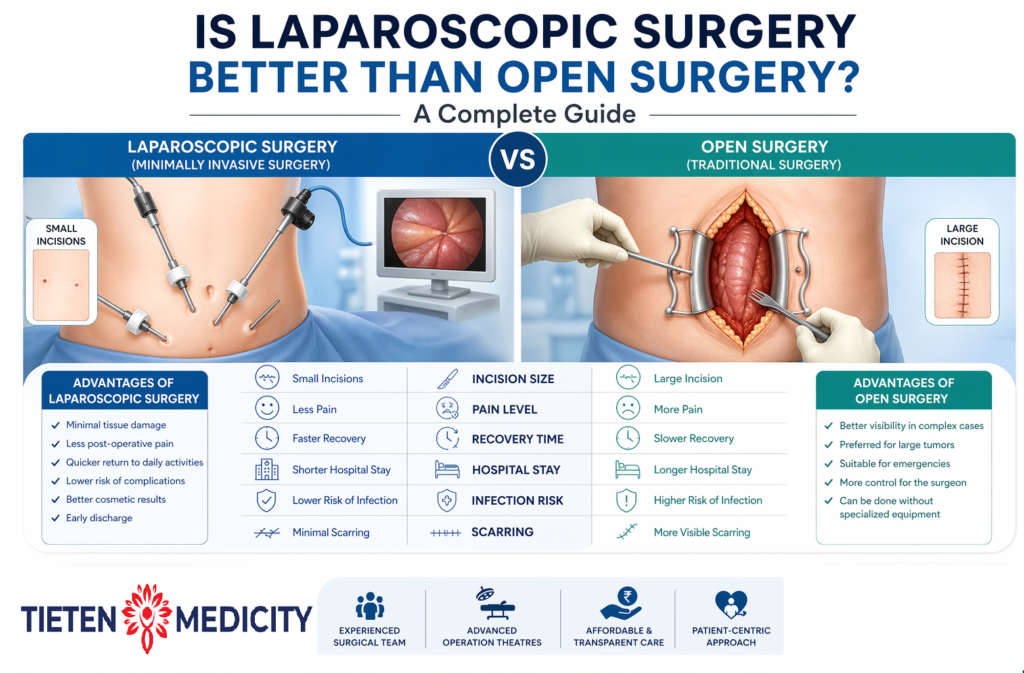
Understanding the differences between laparoscopic surgery (minimally invasive surgery) and open surgery (traditional surgery) is essential for patients when choosing the most suitable treatment option. Each approach has its own advantages and limitations, and the right choice depends on the patient’s condition, overall health, and the complexity of the procedure.
-
Incision Size and Surgical Approach
Laparoscopic surgery uses small incisions (usually 0.5–1 cm) through which a thin instrument called a laparoscope (a camera) and specialized surgical tools are inserted. This allows surgeons to operate with high precision while viewing internal organs on a monitor.
In contrast, open surgery requires a larger incision (often several centimeters long) to directly access the affected organ. This provides a clear and wide view for the surgeon but involves more physical disruption to the body.
-
Pain Levels and Post-Operative Comfort
Because laparoscopic surgery involves minimal cutting of skin and muscle tissues, patients generally experience significantly less pain after surgery. Pain is often manageable with mild medications.
Open surgery, however, involves deeper and larger cuts, which can lead to moderate to severe post-operative pain, often requiring stronger pain relief and longer pain management.
-
Recovery Time and Return to Daily Activities
Recovery is one of the biggest advantages of laparoscopic surgery. Most patients can resume light activities within a few days and return to normal routines much sooner.
With open surgery, recovery is slower due to the larger wound. Patients may need several weeks to months before fully returning to their usual lifestyle.
-
Hospital Stay Duration
Laparoscopic procedures are often performed as daycare or short-stay surgeries, meaning patients can go home within 24–48 hours, or sometimes even the same day.
Open surgery typically requires a longer hospital stay (3–7 days or more) depending on the complexity of the operation and the patient’s recovery.
-
Risk of Infection and Complications
Smaller incisions in laparoscopic surgery reduce exposure to external contaminants, leading to a lower risk of infections and complications.
In open surgery, the larger wound increases the chances of infection, blood loss, and other post-operative complications, especially in patients with underlying health conditions.
-
Scarring and Cosmetic Outcome
Laparoscopic surgery leaves tiny scars that fade over time, making it a preferred option for patients concerned about appearance.
Open surgery, due to its larger incision, results in more visible and permanent scarring.
-
Cost Consideration
Laparoscopic surgery may involve higher upfront costs due to advanced equipment and technology. However, the overall cost is often balanced by:
- Shorter hospital stays
- Faster recovery
- Reduced medication use
- Earlier return to work
Open surgery may appear less expensive initially but can lead to higher overall costs due to longer hospitalization and recovery time.
Advantages of Laparoscopic Surgery
Laparoscopic surgery has transformed modern surgical care by offering safer, faster, and more patient-friendly treatment options.
-
Minimal Tissue Damage
Since only small incisions are made, there is less disruption to muscles, nerves, and surrounding tissues. This reduces surgical trauma and allows the body to heal more efficiently.
-
Faster Recovery and Early Mobility
Patients can usually start walking within 24 hours after surgery. Early mobility helps:
- Improve blood circulation
- Reduce the risk of blood clots
- Speed up overall recovery
This is particularly beneficial for elderly patients and working professionals.
-
Reduced Post-Operative Pain
Less tissue injury means lower pain intensity, reducing the need for strong painkillers. This also lowers the risk of medication-related side effects.
-
Better Cosmetic Results
Small incisions lead to minimal and barely noticeable scars, which is an important factor for many patients, especially in abdominal or visible areas.
-
Lower Risk of Infection
Because the surgical wounds are smaller and less exposed, there is a significantly reduced risk of surgical site infections, making the procedure safer overall.
-
Shorter Hospital Stay
Many laparoscopic procedures are done as daycare surgeries, allowing patients to return home quickly. This not only improves comfort but also reduces hospital-related stress and expenses.
-
Less Blood Loss During Surgery
Laparoscopic techniques are highly precise, resulting in minimal blood loss compared to open surgery. This reduces the need for blood transfusions.
-
Quicker Return to Work and Daily Life
Patients can resume work and daily activities much sooner, which is especially important for individuals with busy schedules or limited time for recovery.
Advantages of Open Surgery
Despite the rapid growth of minimally invasive techniques, open surgery remains a cornerstone of modern surgical practice, especially in complex and high-risk situations.
-
Superior Access and Direct Visibility
Open surgery allows surgeons to directly view and access internal organs without relying on a camera. This provides a wider field of vision and enables better judgment during complicated procedures. Surgeons can also physically feel tissues (tactile feedback), which helps in identifying abnormalities such as tumors, hardened tissues, or hidden infections.
-
Better for Emergency Situations
In life-threatening emergencies like:
- Severe trauma
- Internal bleeding
- Organ rupture
Open surgery provides immediate and unrestricted access, allowing surgeons to act quickly and control the situation efficiently. Time is critical in such cases, and open surgery often becomes the safest option.
-
Essential for Complex and Advanced Cases
Certain medical conditions require extensive surgical intervention, such as:
- Large or advanced-stage tumors
- Multiple organ involvement
- Severe infections or abscesses
In these situations, open surgery allows for complete removal or treatment with better control, reducing the risk of incomplete procedures.
-
Greater Surgical Flexibility
Open surgery gives surgeons more freedom to adapt during the procedure. If unexpected complications arise, it is easier to modify the surgical approach without limitations.
-
No Dependence on Specialized Equipment
Unlike laparoscopic surgery, which relies on advanced cameras and instruments, open surgery can be performed with standard surgical tools, making it more accessible in certain healthcare settings.
Disadvantages of Laparoscopic Surgery
While laparoscopic surgery offers many benefits, it also has certain limitations that must be considered.
-
Requires Highly Skilled Surgeons
Laparoscopic procedures demand specialized training and expertise. The surgeon operates using a camera and long instruments, which requires precision, coordination, and experience.
-
Not Suitable for All Patients
Patients with the following conditions may not be ideal candidates:
- Extensive abdominal adhesions (scar tissue)
- Very large tumors
- Severe obesity or complex anatomy
- Advanced infections
In such cases, open surgery may be safer and more effective.
-
Longer Duration in Complex Cases
Although laparoscopic surgery is quick for routine procedures, it may take longer in complicated cases, especially when visibility is limited or technical challenges arise.
-
Limited Tactile Feedback
Surgeons cannot directly feel tissues during laparoscopic surgery. This lack of touch sensation can make it harder to assess tissue characteristics compared to open surgery.
-
Risk of Conversion to Open Surgery
In some situations, surgeons may need to convert laparoscopic surgery to open surgery due to:
- Unexpected complications
- Excessive bleeding
- Poor visibility
This is done purely for patient safety.
Disadvantages of Open Surgery
Open surgery, although effective, comes with several drawbacks compared to minimally invasive techniques.
-
Larger Incisions and Visible Scars
The procedure involves large cuts, which result in noticeable scars that may take longer to heal.
-
Increased Post-Operative Pain
Due to greater tissue damage, patients experience more pain and discomfort, often requiring stronger pain medications.
-
Higher Risk of Infection
Larger wounds increase the risk of surgical site infections, especially if proper care is not maintained.
-
Longer Recovery Time
Healing takes more time, and patients may need weeks to months before returning to normal activities.
-
Extended Hospital Stay
Patients often require longer hospitalization, which can increase both physical and emotional stress.
Which Surgery is Better?
There is no one-size-fits-all answer. The choice depends on multiple factors such as:
- Nature and severity of the condition
- Patient’s medical history
- Surgeon’s expertise
- Available medical facilities
However, for routine and uncomplicated procedures, laparoscopic surgery is generally preferred due to its patient-friendly benefits.
Laparoscopic Surgery is Better When:
- The condition is simple and well-defined
- Faster recovery is important
- Minimal scarring is desired
- The patient is medically fit for minimally invasive techniques
Open Surgery is Better When:
- The condition is complex or life-threatening
- There is severe bleeding or infection
- The patient has undergone multiple previous surgeries
- Large tumors or advanced cancers are involved
Recovery Comparison
Recovery time significantly affects patient comfort and overall satisfaction.
Laparoscopic Surgery Recovery
- Walking within 24 hours
- Daily activities resumed within 5–7 days
- Full recovery in 2–3 weeks
- Minimal discomfort and faster healing
Open Surgery Recovery
- Limited movement in initial days
- Daily activities resume after 3–6 weeks
- Full recovery may take 2–3 months
- Requires more rest and post-operative care
Risks and Complications
All surgeries carry some risks, but the level varies depending on the technique used.
Laparoscopic Surgery Risks
- Rare injury to nearby organs
- Gas-related discomfort (bloating or shoulder pain)
- Possibility of conversion to open surgery
Open Surgery Risks
- Higher chances of infection
- Greater blood loss
- Risk of post-surgical hernia
- Longer healing period with potential complications
Cost Comparison
Although laparoscopic surgery may have higher initial costs, it often becomes more economical due to:
- Shorter hospital stays
- Reduced medication use
- Faster return to work
Open surgery may seem cheaper initially but can lead to higher overall expenses due to prolonged recovery.
Role of Surgeon Expertise
The success of any surgery depends heavily on the skill and experience of the surgeon. An experienced surgeon can:
- Minimize risks
- Handle complications effectively
- Ensure better outcomes
Choosing the right hospital and surgical team is just as important as selecting the surgical method.
Why Choose Tieten Medicity Hospital, Thane?
Tieten Medicity Hospital is known for delivering advanced and reliable surgical care with a patient-first approach.
Key Highlights:
- Highly experienced and skilled surgical team
- Advanced operation theatres with modern technology
- Affordable and transparent treatment plans
- Personalized patient care and support
- High success rate in minimally invasive surgeries
The hospital focuses on safety, precision, and patient satisfaction, ensuring the best possible outcomes.
Final Verdict
So, is laparoscopic surgery better than open surgery?
In most routine cases, yes, laparoscopic surgery is better due to:
- Faster recovery
- Less pain
- Minimal scarring
However, open surgery remains essential for complex, emergency, and life-threatening conditions.
Conclusion
Modern surgical advancements have made treatments safer and more efficient. Laparoscopic surgery has revolutionized patient care by offering quicker recovery and improved comfort. However, open surgery continues to play a critical and life-saving role in many medical situations.
The best decision should always be made after consulting a qualified and experienced surgeon, who can recommend the most appropriate treatment based on your specific condition.
FAQs
-
Is laparoscopic surgery completely safe?
No surgery is entirely risk-free, but laparoscopic surgery is highly safe when performed by experienced surgeons.
-
Can laparoscopic surgery be converted to open surgery?
Yes, surgeons may switch to open surgery if needed to ensure patient safety and better outcomes.
-
Is laparoscopic surgery less painful?
Yes, it generally causes significantly less pain compared to open surgery.
-
How long does laparoscopic surgery take?
It usually takes 30 minutes to 2 hours, depending on the procedure.
-
Who should avoid laparoscopic surgery?
Patients with large tumors, severe infections, or multiple previous surgeries may not be ideal candidates.
