



Blood in Stool Causes, Types & Treatment | When to Worry?
Finding blood in your stool can be alarming, and it’s completely natural to feel concerned—especially about serious conditions like Colorectal Cancer. However, it’s important to understand that not all cases of rectal bleeding indicate something life-threatening. In fact, many instances are caused by relatively minor and treatable conditions.
One of the most common causes is Hemorrhoids—swollen blood vessels in the rectal or anal area that can bleed during bowel movements. Another frequent cause is an Anal Fissure, which is a small tear in the lining of the anus, often resulting from passing hard stools. Both of these conditions can cause bright red blood and are usually accompanied by discomfort or pain.
Other possible causes include infections, inflammatory conditions like Ulcerative Colitis or Crohn’s Disease, and digestive issues such as Peptic Ulcer Disease. In some cases, bleeding may originate higher up in the digestive tract, which can cause darker, tar-like stools.
The appearance of the blood can offer clues:
- Bright red blood usually suggests bleeding from the lower rectum or anus.
- Dark red or maroon blood may indicate bleeding from the colon.
- Black, tarry stools can be a sign of bleeding in the upper gastrointestinal tract.
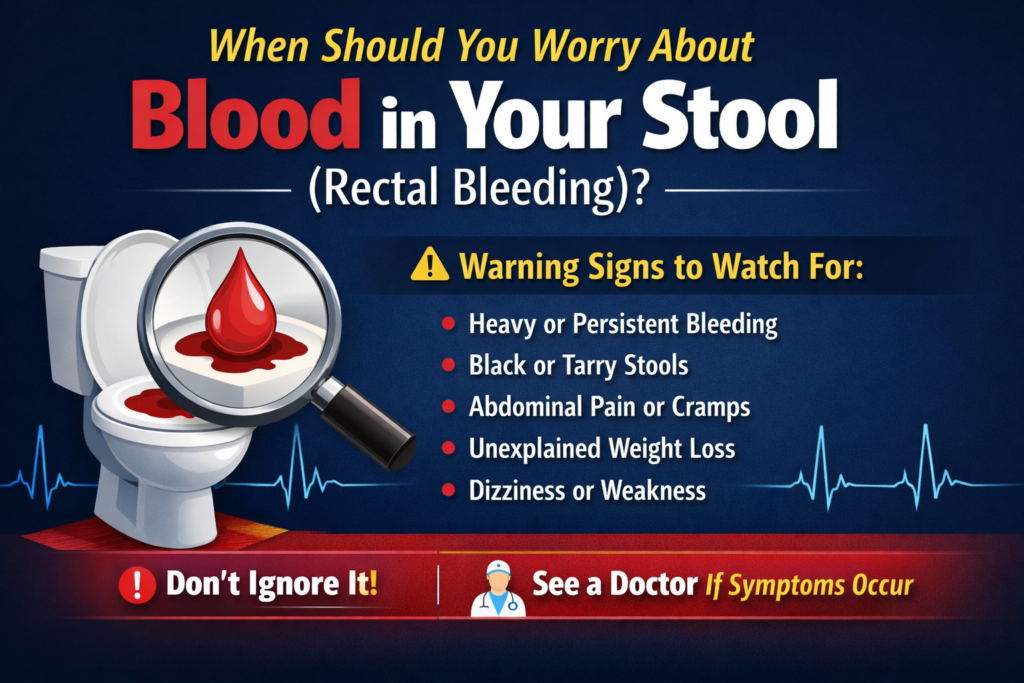
While occasional minor bleeding may not be urgent, rectal bleeding should never be ignored. You should seek medical attention if you notice:
- Persistent or recurring bleeding
- Large amounts of blood
- Accompanying symptoms like abdominal pain, weight loss, fatigue, or changes in bowel habits
- Signs of anemia, such as weakness or dizziness
Early evaluation is especially important because conditions like Colorectal Cancer often develop silently and are more treatable when detected early.
A doctor may recommend tests such as a physical examination, stool tests, or procedures like a colonoscopy to identify the cause. Prompt diagnosis not only provides peace of mind but also ensures that any serious condition is treated as early as possible.
What Does Blood in Stool Mean? Causes, Types, Diagnosis & Treatment
Noticing blood in your stool can be frightening and emotionally stressful. Many people immediately assume serious illnesses like cancer, but the truth is that in most cases, rectal bleeding is caused by common and treatable conditions such as piles (hemorrhoids), anal fissures, or minor infections.
However, ignoring this symptom is never a good idea.
Blood in stool (medically known as rectal bleeding) is not a disease itself—it is a warning sign that there is bleeding somewhere in your digestive system. This could range from a small tear near the anus to conditions affecting deeper parts of the intestines.
The key is early detection and proper diagnosis because:
- Some causes are minor and easily treatable
- Others may indicate serious underlying conditions requiring urgent care
What Does Blood in Stool Indicate?
Your digestive system is a long and complex pathway that includes:
- Stomach
- Small intestine
- Large intestine (colon)
- Rectum and anus
Bleeding can occur at any point in this system, and the appearance of blood gives important clues about the source.
Important Medical Insight
- If bleeding occurs near the anus, the blood usually appears bright red
- If bleeding occurs higher in the digestive tract, the blood gets partially digested and appears dark red, maroon, or black (tarry stools)
This is why doctors always ask:
- What is the color of the blood?
- How often does it occur?
- Are there any associated symptoms like pain, constipation, or diarrhea?
These details help doctors quickly identify the possible cause.
Types of Blood in Stool – Causes, Meaning & When to Worry
Noticing blood in your stool can be alarming, but understanding the type, color, and appearance of the blood can provide important clues about its source and severity. Blood in stool is not a disease itself—it is a symptom of an underlying condition that can range from minor issues like piles to more serious digestive disorders.
The color of blood in stool mainly depends on where the bleeding is occurring in the digestive tract. From the anus to the stomach, each section produces a different appearance of blood. Recognizing these differences can help in early diagnosis, timely treatment, and prevention of complications.
- Bright Red Blood in Stool (Fresh Bleeding)
Bright red blood, also known as fresh bleeding, is one of the most commonly noticed types. It usually appears on toilet paper, on the surface of the stool, or as drops in the toilet bowl after passing stool.
What Does It Indicate?
This type of bleeding typically originates from the lower part of the digestive tract, especially the rectum or anus. Since the blood has not traveled far, it retains its bright red color.
Common Causes:
- Piles (Hemorrhoids): Swollen veins in the rectum or anus that may bleed during bowel movements
- Anal Fissures: Small tears in the lining of the anus caused by passing hard stool
- Constipation: Straining during bowel movements can lead to minor bleeding
- Rectal Injury or Irritation: Due to excessive wiping or infection
Symptoms Associated:
- Pain or discomfort while passing stool
- Itching or irritation around the anal area
- Visible blood after bowel movement
- Dark Red or Maroon Blood in Stool
Dark red or maroon-colored blood is usually mixed with the stool, making it less obvious than bright red bleeding. This type of blood indicates that the bleeding is occurring higher up in the digestive tract, such as the colon or small intestine.
What Does It Indicate?
This suggests bleeding from the middle portion of the gastrointestinal tract, where blood has had some time to partially digest but not enough to turn black.
Common Causes:
- Infections in the Intestines: Bacterial or viral infections causing inflammation
- Inflammatory Bowel Disease (IBD): Conditions like colitis or Crohn’s disease
- Diverticulosis: Small pouches in the colon that can bleed
- Polyps or Growths in Colon: May sometimes indicate early warning signs of serious conditions
Symptoms Associated:
- Abdominal pain or cramping
- Diarrhea or irregular bowel movements
- Fatigue due to blood loss
- Mucus in stool
- Black or Tarry Stool (Melena)
Black, sticky, and foul-smelling stool—medically known as Melena—is a more serious sign. It usually indicates bleeding from the upper digestive tract, such as the stomach or small intestine.
What Does It Indicate?
When blood travels through the digestive system, it gets digested and turns black in color, giving the stool a tar-like appearance. This type of bleeding is often more serious and requires immediate medical attention.
Common Causes:
- Stomach Ulcers: Open sores in the stomach lining
- Gastritis: Inflammation of the stomach lining
- Esophageal or Gastric Bleeding: Due to severe conditions
- Use of Certain Medications: Such as NSAIDs causing internal bleeding
Symptoms Associated:
- Weakness or dizziness
- Nausea or vomiting (sometimes with blood)
- Pale skin due to blood loss
- Foul-smelling stool
Causes of Blood in Stool (Comprehensive & Detailed Guide)
Blood in stool can vary in color, quantity, and frequency, and these differences often provide important clues about where the bleeding is coming from in the digestive system. While some causes are mild and temporary, others may indicate chronic disease or serious conditions that require early diagnosis.
- Hemorrhoids (Piles)
Hemorrhoids are enlarged, swollen veins in the lower rectum or around the anus. They can be internal (inside the rectum) or external (under the skin around the anus).
Why they bleed:
Straining during bowel movements increases pressure in these veins, causing them to swell and sometimes rupture.
Types:
- Internal hemorrhoids: Usually painless but bleed easily
- External hemorrhoids: Can be painful, swollen, and itchy
Symptoms:
- Bright red blood (often seen after wiping)
- Mucus discharge in some cases
- Swelling or lump near the anus
- Itching and irritation
Complications (if untreated):
- Thrombosed hemorrhoids (painful blood clots)
- Chronic discomfort or recurrent bleeding
- Anal Fissure
An anal fissure is a small tear in the thin lining of the anus, often caused by trauma from passing hard stool.
Why it bleeds:
The tear exposes sensitive tissue and tiny blood vessels, which can bleed during bowel movements.
Symptoms:
- Severe, sharp pain during passing stool
- Burning sensation lasting minutes to hours
- Small streaks of bright red blood
- Fear of passing stool due to pain
Chronic fissures:
If untreated, fissures may persist and form scar tissue, making healing more difficult.
- Constipation (Chronic Bowel Straining)
Constipation is one of the root contributors to rectal bleeding, even though it’s not a direct cause.
How it leads to bleeding:
- Hard stool can tear the anal lining
- Repeated straining damages blood vessels
- Increases risk of hemorrhoids and fissures
Symptoms:
- Fewer than 3 bowel movements per week
- Dry, hard, or lumpy stools
- Abdominal bloating or discomfort
Long-term risks:
- Rectal prolapse (in severe cases)
- Chronic hemorrhoids
- Ulcerative Colitis and Crohn’s Disease
These are chronic inflammatory conditions collectively known as Inflammatory Bowel Disease (IBD).
Why they bleed:
Persistent inflammation damages the intestinal lining, leading to ulcers that bleed.
Key differences:
- Ulcerative Colitis: Affects only the colon and rectum
- Crohn’s Disease: Can affect any part of the digestive tract
Symptoms:
- Blood and mucus mixed in stool
- Frequent diarrhea
- Abdominal cramps
- Fatigue and malnutrition
Complications:
- Severe bleeding
- Intestinal strictures or blockages
- Increased risk of colon cancer over time
- Peptic Ulcer Disease
Peptic ulcers are open sores in the stomach lining or upper small intestine.
Why it causes blood in stool:
Bleeding occurs in the upper digestive tract, and the blood gets digested, turning stools black and tarry (called melena).
Symptoms:
- Black, sticky stools with a strong odor
- Burning stomach pain
- Nausea or bloating
- Vomiting blood (in severe cases)
Common causes:
- Helicobacter pylori infection
- Long-term use of NSAIDs (painkillers)
- Excess stomach acid
- Colorectal Cancer (Serious Cause)
This is a potentially life-threatening condition but is highly treatable if detected early.
Why it bleeds:
Cancerous growths (tumors) in the colon or rectum can slowly bleed into the stool.
Early signs (often subtle):
- Occult bleeding (not visible, detected in tests)
- Mild changes in bowel habits
Advanced warning signs:
- Blood mixed within stool
- Narrow or pencil-thin stools
- Unexplained weight loss
- Persistent fatigue (due to anemia)
Risk factors:
- Age over 45–50
- Family history
- Low-fiber, high-fat diet
- Smoking and alcohol
- Other Possible Causes
In some cases, bleeding may be due to less common conditions:
- Diverticular disease (small pouches in the colon that bleed)
- Gastrointestinal infections (bacterial or parasitic)
- Colon polyps (non-cancerous growths that can bleed)
- Angiodysplasia (fragile blood vessels in the colon)
When Should You See a Doctor for Blood in Stool?
Not every case of blood in stool is serious, but it should never be ignored, especially if it occurs repeatedly or is accompanied by other symptoms. While minor issues like piles or fissures can cause occasional bleeding, persistent or unusual signs may indicate a more serious underlying condition that requires immediate medical attention.
Warning Signs You Should Not Ignore:
- Frequent or heavy bleeding: If you notice blood regularly or in large amounts, it could signal a more serious gastrointestinal issue
- Black or tarry stool: This may indicate bleeding in the upper digestive tract and requires urgent evaluation
- Severe abdominal pain or cramping: Could be linked to infections, inflammation, or intestinal disorders
- Sudden or unexplained weight loss: A potential red flag for chronic or serious diseases
- Weakness, dizziness, or fatigue: May indicate anemia caused by continuous blood loss
- Blood mixed within stool (not just on surface): Suggests deeper digestive tract involvement
Early medical consultation can help prevent complications and ensure timely treatment.
Diagnosis of Blood in Stool
To determine the exact cause of blood in stool, doctors use a combination of clinical evaluation and diagnostic tests. Proper diagnosis is essential because treatment depends entirely on the underlying condition.
- Physical Examination
The doctor may begin with a basic physical check, especially of the rectal area, to identify visible causes such as:
- Piles (hemorrhoids)
- Anal fissures
- Swelling, tears, or infections
This initial step helps rule out common and less serious conditions.
- Stool Test (Stool Analysis)
A stool test is commonly recommended to:
- Detect occult (hidden) blood not visible to the eye
- Identify bacterial, viral, or parasitic infections
- Check for inflammation markers
This is often one of the first diagnostic steps for patients searching “test for blood in stool.”
- Blood Test
Blood tests help evaluate overall health and detect complications such as:
- Anemia caused by chronic blood loss
- Signs of infection or inflammation
- Nutritional deficiencies
It provides a broader understanding of how the condition is affecting your body.
- Colonoscopy
A colonoscopy is one of the most effective diagnostic procedures. It involves inserting a thin, flexible tube with a camera into the colon to examine the internal lining.
It helps in detecting:
- Polyps or abnormal growths
- Ulcers or inflammation
- Sources of bleeding
- Early signs of colorectal cancer
- Endoscopy
An endoscopy is used to examine the upper digestive tract, including the esophagus, stomach, and upper small intestine.
It is recommended when:
- Black or tarry stools are present
- Upper gastrointestinal bleeding is suspected
- Symptoms like vomiting blood or severe acidity occur
This test helps identify conditions such as ulcers, gastritis, or internal bleeding.
Treatment for Blood in Stool
The treatment for blood in stool depends entirely on the underlying cause of bleeding, which can range from minor conditions like hemorrhoids to more serious gastrointestinal disorders. Proper diagnosis is the first and most important step, as it helps doctors create a targeted and effective treatment plan. Ignoring symptoms or opting for self-medication can delay recovery and may lead to complications, so medical guidance is always recommended.
Once the cause is identified, treatment focuses on relieving symptoms, stopping the bleeding, and preventing recurrence.
Treatment for Piles (Hemorrhoids) & Anal Fissures
Conditions like piles (hemorrhoids) and anal fissures are among the most common reasons for blood in stool, especially when the blood is bright red. These conditions are usually not serious and can often be managed with lifestyle changes and basic medical care.
Common Treatment Approaches:
- High-Fiber Diet:
Consuming fiber-rich foods like fruits, vegetables, and whole grains helps soften stool and prevents constipation, reducing strain during bowel movements. - Increased Water Intake:
Staying well-hydrated improves digestion and makes bowel movements smoother. - Sitz Baths:
Sitting in warm water for 10–15 minutes helps reduce pain, swelling, and irritation in the anal area. - Medicated Creams & Ointments:
Topical treatments provide relief from itching, inflammation, and discomfort. - Lifestyle Modifications:
Avoid prolonged sitting, reduce straining, and maintain regular bowel habits.
In most cases, these treatments are effective, but severe hemorrhoids may require minimally invasive procedures.
Treatment for Infections
If blood in stool is caused by bacterial, viral, or parasitic infections, treatment focuses on eliminating the infection and restoring gut health.
Treatment Includes:
- Antibiotics or Antiparasitic Medications:
Prescribed based on the type of infection identified through stool tests. - Hydration:
Maintaining fluid balance is crucial, especially if diarrhea is present. - Rest & Dietary Adjustments:
Light, easily digestible foods are recommended to support recovery. - Probiotics (in some cases):
Help restore healthy gut bacteria after infection.
Prompt treatment usually resolves infection-related bleeding quickly.
Treatment for Inflammatory Bowel Disease (IBD)
Chronic conditions like Inflammatory Bowel Disease (IBD)—including colitis and Crohn’s disease—require long-term management rather than a one-time treatment. These conditions can cause recurring inflammation and bleeding in the digestive tract.
Management Strategies:
- Anti-Inflammatory Medications:
Help reduce swelling and irritation in the intestines. - Immune System Suppressors:
Used in moderate to severe cases to control abnormal immune responses. - Regular Monitoring:
Ongoing checkups and tests are essential to track disease progression. - Diet & Lifestyle Changes:
Avoiding trigger foods, managing stress, and maintaining a balanced diet are key.
With proper management, many patients can lead normal and active lives.
Treatment for Severe or Advanced Conditions
In some cases, blood in stool may indicate more serious conditions that require advanced medical intervention.
Possible Treatments:
- Surgical Intervention:
Required for severe bleeding, structural abnormalities, or complications that cannot be managed with medication. - Removal of Polyps or Growths:
Detected during procedures like colonoscopy and removed to prevent further issues. - Cancer Treatment:
If colorectal or gastrointestinal cancer is diagnosed, treatment may include:- Surgery
- Chemotherapy
- Radiation therapy
Early detection significantly improves treatment outcomes and survival rates.
Home Remedies & Prevention Tips for Blood in Stool
While medical treatment is essential in many cases, simple lifestyle changes and home care can significantly help reduce the risk of rectal bleeding and improve overall digestive health. These remedies are especially effective for common causes like constipation, piles, and minor fissures.
Effective Home Remedies & Daily Habits:
- Eat a Fiber-Rich Diet
Include foods like fruits, vegetables, whole grains, oats, and legumes. Fiber helps soften stool, making bowel movements easier and reducing strain on the rectal area. - Drink Plenty of Water
Staying hydrated is crucial for proper digestion. Drinking 8–10 glasses of water daily prevents hard stools and supports smooth bowel movements. - Avoid Straining During Bowel Movements
Excessive straining puts pressure on veins in the rectum, increasing the risk of hemorrhoids and bleeding. Go to the toilet when you feel the urge and avoid prolonged sitting. - Exercise Regularly
Physical activity improves digestion and prevents constipation. Even light exercise like walking for 20–30 minutes daily can make a big difference. - Maintain Proper Hygiene
Keep the anal area clean and dry. Use soft toilet paper or water for cleaning to avoid irritation and infection. - Use Warm Sitz Baths
Sitting in warm water for 10–15 minutes can help relieve pain, swelling, and discomfort caused by piles or fissures. - Limit Spicy & Processed Foods
Excessively spicy, oily, or processed foods can irritate the digestive tract and worsen symptoms.
Key Takeaways
- Blood in stool is a symptom, not a disease
- Most cases are caused by minor and treatable conditions like piles or fissures
- The color and type of blood help identify the source of bleeding
- Do not ignore persistent or recurrent bleeding
- Early diagnosis and treatment can prevent serious complications
- Maintaining a healthy lifestyle plays a major role in prevention
Conclusion
Seeing blood in your stool can feel alarming, but it’s important to stay calm and take the right steps. In many cases, the cause is simple and treatable with proper care and lifestyle changes. However, it is equally important to understand that blood in stool can sometimes indicate more serious conditions that require timely medical attention.
