



Paralysis: Symptoms, Causes, Types, Treatment & Long-Term Recovery Guide
Paralysis is a serious and life-altering neurological condition that leads to the loss of muscle function in one or more parts of the body. It occurs when there is a breakdown in communication between the brain, spinal cord, and muscles. This disruption may result from injury, disease, infection, or trauma affecting the nervous system. Depending on the severity and underlying cause, paralysis can be temporary, partial, or permanent. In many cases, it significantly impacts a person’s mobility, independence, and overall quality of life.
In modern times, increasing cases of stroke, spinal cord injuries, and chronic neurological disorders have made paralysis a major global health concern. Factors such as sedentary lifestyle, high stress levels, poor diet, and rising cases of hypertension and diabetes contribute to its growing prevalence. Early diagnosis, timely medical intervention, and proper rehabilitation play a crucial role in improving recovery outcomes and preventing long-term complications.
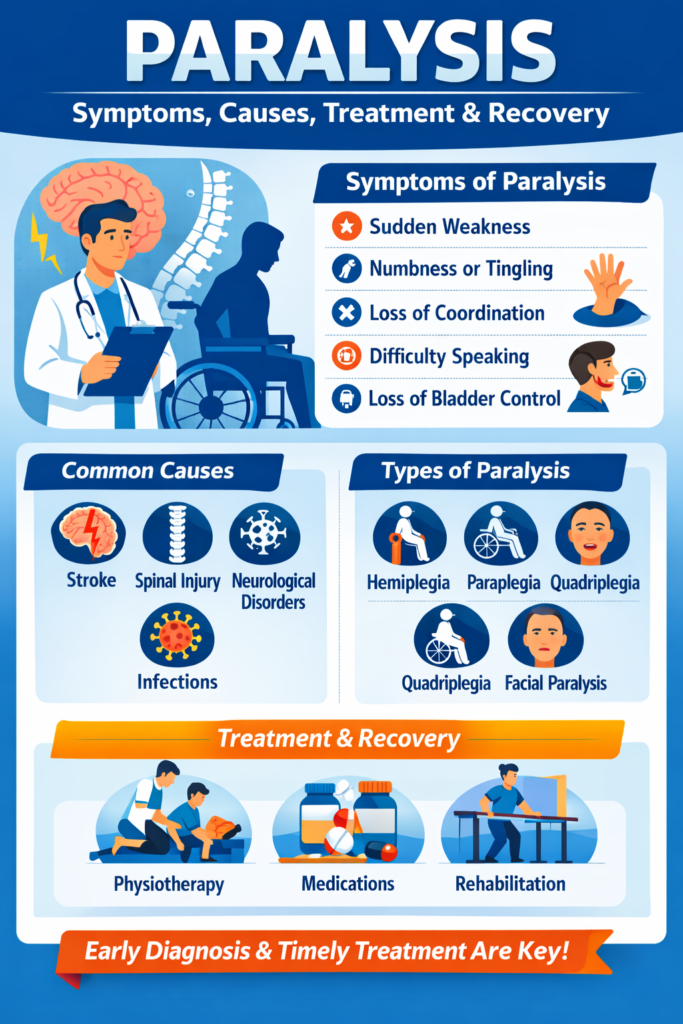
What is Paralysis? (Detailed Medical Explanation)
Paralysis is defined as the inability to voluntarily control muscle movements in a specific part of the body. This condition occurs when nerve signals from the brain fail to reach the muscles due to damage in the central or peripheral nervous system. It may also involve loss of sensation, meaning the affected area cannot feel touch, pain, or temperature changes.
To understand paralysis better, it is important to know how the nervous system functions. The brain acts as the control center, sending signals through the spinal cord, which then transmits these signals via peripheral nerves to different parts of the body. When this communication pathway is interrupted—whether due to nerve damage, spinal injury, or brain disorders—it results in loss of movement, coordination, and sometimes sensation. This is why conditions affecting the nervous system are often directly linked to paralysis.
Common search terms related to this include what is paralysis disease, paralysis meaning in medical terms, and how nerve damage causes paralysis, which reflect the importance of understanding its medical basis.
Early Symptoms of Paralysis You Should Never Ignore
The early symptoms of paralysis can vary widely depending on the underlying cause and severity of nerve damage. In many cases, symptoms begin subtly and gradually worsen over time, while in others, they may appear suddenly, especially in emergencies like stroke.
Initially, a person may experience weakness in the arms or legs, making it difficult to perform everyday activities such as lifting objects or walking. Loss of balance and coordination is another early sign, often leading to frequent falls or instability while moving. Some individuals may notice slurred speech, facial drooping, or difficulty smiling, which are classic warning signs of neurological impairment.
As the condition progresses, symptoms may become more severe. These include complete loss of movement in a body part, muscle stiffness or spasms, and difficulty breathing or swallowing in critical cases. Loss of bladder or bowel control may also occur, indicating advanced nerve dysfunction.
Sudden onset of these symptoms can indicate a medical emergency such as a stroke. Keywords like early symptoms of paralysis, warning signs of stroke paralysis, and sudden paralysis symptoms causes are commonly searched by individuals trying to identify these warning signs early.
Major Causes of Paralysis (In-Depth Analysis)
Paralysis can result from a wide range of medical conditions that affect the brain, spinal cord, or peripheral nerves. One of the most common causes is stroke, which occurs when blood flow to a part of the brain is blocked or reduced. This leads to brain cell damage and often results in hemiplegia, where one side of the body becomes paralyzed. Stroke-related paralysis usually affects the face, arm, and leg on one side and requires immediate medical attention.
Another major cause is spinal cord injury, which often results from traumatic events such as road accidents, falls, or sports injuries. Damage to the spinal cord disrupts communication between the brain and the rest of the body, leading to conditions like paraplegia (paralysis of the lower body) or quadriplegia (paralysis of all four limbs).
Neurological disorders such as multiple sclerosis, amyotrophic lateral sclerosis (ALS), and Parkinson’s disease can also lead to gradual paralysis by damaging nerve cells over time. Similarly, brain injuries and tumors can interfere with nerve signaling, causing partial or complete loss of movement.
Infections and autoimmune conditions like Guillain-Barré syndrome, polio, and meningitis may also lead to temporary or progressive paralysis by attacking the nervous system. Additionally, congenital conditions such as cerebral palsy and spina bifida can cause paralysis from birth due to developmental abnormalities.
People often search for terms like causes of paralysis in adults, spinal cord injury paralysis symptoms, and neurological diseases causing paralysis to better understand these underlying factors.
Types of Paralysis Explained in Detail
Paralysis is classified into different types based on the area affected, severity, and muscle condition. Understanding these types helps doctors diagnose the condition accurately and plan appropriate treatment.
Based on the body parts affected, paralysis can be categorized into monoplegia, which affects a single limb, and hemiplegia, which affects one side of the body and is commonly seen after a stroke. Paraplegia affects both legs and the lower body, usually due to spinal cord injuries, while quadriplegia (also known as tetraplegia) affects all four limbs and sometimes the torso, significantly limiting mobility.
Facial paralysis is another type that affects the muscles of the face, often seen in conditions like Bell’s palsy. It can cause drooping of one side of the face and difficulty in facial expressions.
Based on severity, paralysis can be complete, where there is no movement or sensation, or partial, where some level of function remains. From a muscular perspective, paralysis is categorized into spastic paralysis, where muscles become stiff and tight, and flaccid paralysis, where muscles become weak and limp.
Search queries like types of paralysis explained, hemiplegia vs paraplegia difference, and spastic vs flaccid paralysis are highly relevant in this section.
Complications of Paralysis (Long-Term Health Risks)
Paralysis can lead to multiple long-term complications if not properly managed. Physically, patients are at risk of developing pressure sores due to prolonged immobility, especially if they remain in one position for extended periods. Muscle atrophy, or muscle wasting, occurs when muscles are not used regularly, leading to further weakness.
There is also an increased risk of blood clots, particularly deep vein thrombosis, due to reduced movement. Respiratory problems may arise if the muscles involved in breathing are affected. Internally, patients may experience digestive issues, urinary tract infections, and loss of bladder or bowel control.
The psychological impact of paralysis should not be overlooked. Many patients face depression, anxiety, and social isolation due to reduced independence and lifestyle changes. This highlights the importance of comprehensive care, including mental health support.
Keywords such as complications of paralysis patients, long term effects of paralysis, and paralysis recovery challenges are commonly searched.
Advanced Diagnosis of Paralysis
Diagnosing paralysis involves a combination of physical examination and advanced medical tests to determine the exact cause and severity. Doctors often begin with a neurological examination to assess muscle strength, reflexes, and sensory response.
Imaging tests such as MRI and CT scans are used to visualize the brain and spinal cord and identify any damage, tumors, or abnormalities. Electromyography (EMG) and nerve conduction studies help evaluate the electrical activity of muscles and nerves, providing insight into nerve function.
Blood tests may also be conducted to detect infections, autoimmune disorders, or metabolic conditions contributing to paralysis. Early diagnosis is crucial as it allows for timely treatment, reducing the risk of permanent damage.
Common SEO searches include paralysis diagnosis tests, MRI for paralysis detection, and nerve damage diagnosis methods.
Treatment Options for Paralysis (Complete Guide)
The treatment of paralysis depends on its underlying cause, severity, and duration. In many cases, a combination of medical treatment and rehabilitation is required for optimal recovery.
Medications are often used to manage symptoms, reduce inflammation, prevent blood clots, and control pain. Physiotherapy plays a vital role in improving muscle strength, flexibility, and mobility. Regular exercises help prevent stiffness and maintain muscle tone.
Occupational therapy focuses on helping patients regain independence by teaching them how to perform daily activities using adaptive techniques. In some cases, surgical intervention may be required to repair damaged nerves, remove tumors, or stabilize the spine.
Assistive devices such as wheelchairs, braces, and walking aids are commonly used to enhance mobility. Advanced treatments like robotic rehabilitation therapy, neurostimulation, and stem cell therapy are emerging as promising options for improving recovery outcomes.
Search terms like paralysis treatment options, physiotherapy for paralysis recovery, and advanced paralysis treatment in India are important for SEO.
Paralysis Recovery & Rehabilitation Timeline
Recovery from paralysis varies greatly depending on the individual and the cause of the condition. Some patients may show improvement within weeks, while others may require months or even years of rehabilitation.
The recovery process typically begins with the acute phase, where immediate medical treatment is provided. This is followed by the rehabilitation phase, which focuses on regaining strength and mobility through therapy. Long-term recovery involves continuous care, lifestyle adjustments, and ongoing therapy to maintain progress.
Factors such as age, overall health, severity of nerve damage, and how quickly treatment was initiated all play a significant role in determining recovery outcomes.
Can Paralysis Be Cured Permanently?
The possibility of curing paralysis depends largely on the extent of nerve damage. Temporary paralysis caused by conditions like inflammation or minor nerve injury may be reversible with proper treatment. However, severe damage to the brain or spinal cord may result in permanent paralysis.
Even in cases where a complete cure is not possible, rehabilitation therapies can greatly improve a patient’s quality of life by enhancing mobility and independence.
Prevention Tips to Reduce Risk of Paralysis
While not all cases of paralysis can be prevented, certain lifestyle changes can significantly reduce the risk. Maintaining healthy blood pressure, managing diabetes, and following a balanced diet are essential for preventing stroke-related paralysis.
Regular exercise helps improve circulation and overall health, while avoiding smoking and excessive alcohol consumption reduces the risk of neurological damage. Safety measures such as wearing helmets, using seat belts, and preventing falls at home are also important.
Routine health checkups and early treatment of neurological symptoms can help detect potential issues before they become severe.
When to See a Doctor?
It is crucial to seek immediate medical attention if you experience sudden weakness, numbness, difficulty speaking, loss of coordination, or severe headache. These symptoms may indicate a serious condition such as stroke and require urgent care.
Conclusion
Paralysis is a serious but manageable medical condition that requires a combination of timely treatment, rehabilitation, and lifestyle adjustments. Understanding its symptoms, causes, and treatment options can help in early detection and better management. With advancements in modern medicine and rehabilitation techniques, many individuals living with paralysis can regain independence and lead fulfilling lives.
FAQ Paralysis
Q1. What is the main cause of paralysis?
The most common cause is stroke, followed by spinal cord injury and neurological disorders.
Q2. Can paralysis be cured?
Some types can be treated, while others require long-term management and rehabilitation.
Q3. How long does paralysis recovery take?
Recovery can take weeks, months, or even years depending on severity.
Q4. Is paralysis permanent?
Not always. Some cases are temporary and reversible with proper treatment.
