



Fistula vs Piles: Symptoms, Causes, Treatment & Prevention | Expert Care in Thane
Problems related to the anal region such as piles and fistula are more common than many people think. However, due to embarrassment or lack of awareness, many patients delay consulting a doctor. This delay often makes the condition worse and may require more complex treatment later.
If you are experiencing pain, bleeding, swelling, or discharge near the anus, it is important to understand whether the issue could be piles (hemorrhoids) or anal fistula. Though these two conditions affect the same region of the body, they are completely different diseases with different causes and treatments.
At Tieten Medicity Hospital, patients in Thane receive advanced diagnosis and minimally invasive surgical treatment for conditions such as piles, fissure, and fistula.
In this guide, we will explain the difference between piles and fistula, their causes, symptoms, treatment options, and prevention tips.
What is an Anal Fistula?
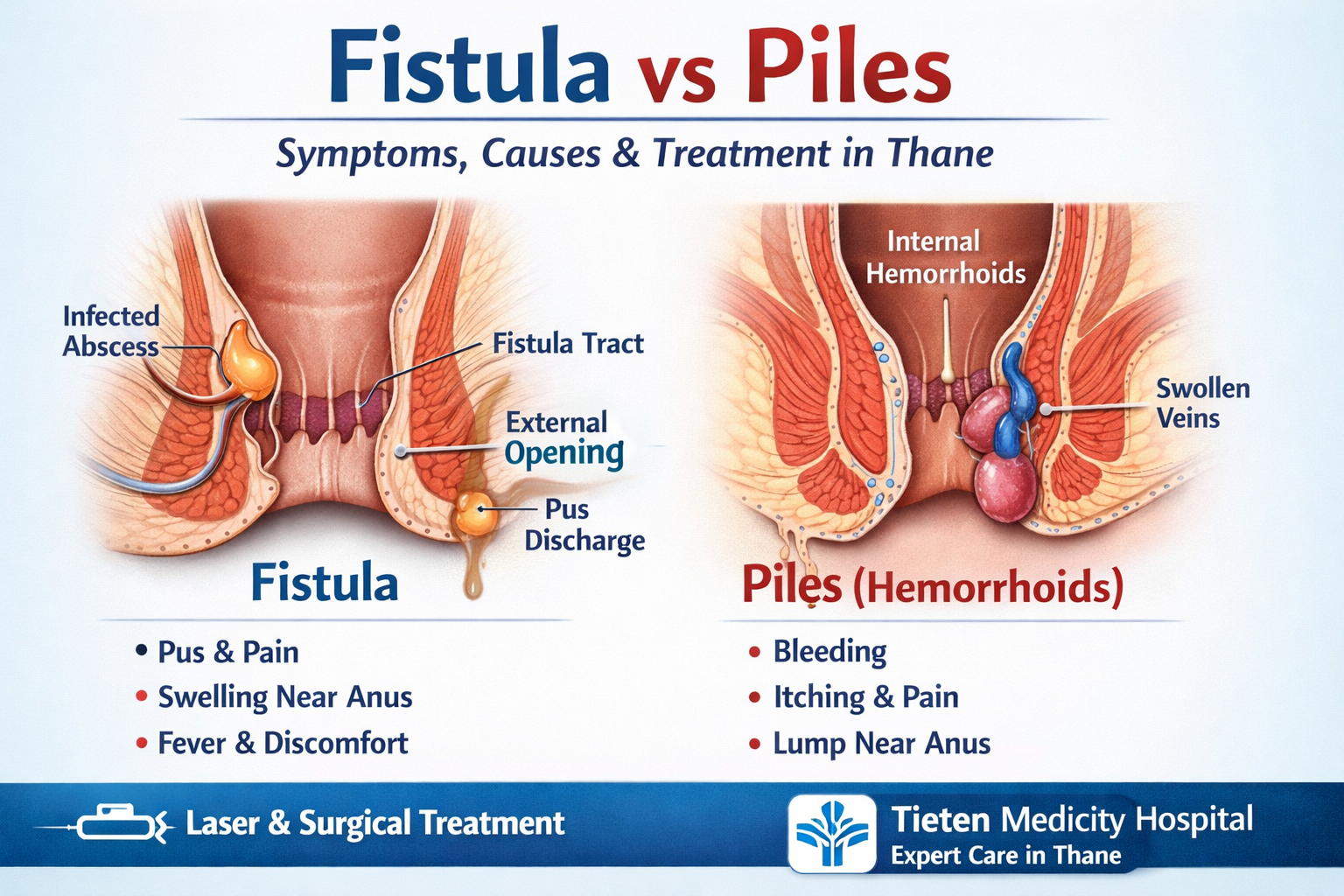
An anal fistula is an abnormal tunnel that forms between the inside of the anal canal and the skin surrounding the anus.
It usually develops after an anal abscess, which is a painful infection in the anal glands. When the infected gland fills with pus, it forms an abscess. If this abscess is not properly treated, it can create a passage or tunnel connecting the anal canal to the outer skin.
This tunnel is called a fistula.
How Does a Fistula Form?
- Infection develops in anal glands
- Pus accumulates and forms an abscess
- The abscess bursts or drains
- A tunnel remains connecting the gland to the skin
This tunnel continues to cause discharge, infection, and pain until it is treated surgically.
Many patients searching for “fistula treatment in Thane” often come to specialized centers like Tieten Medicity Hospital, where advanced surgical techniques are used for effective treatment.
What Are Piles (Hemorrhoids)?
Piles, also known as hemorrhoids, are swollen or inflamed veins located in the lower rectum and anus.
They develop when excessive pressure is placed on the veins around the anus. This pressure causes the veins to swell and sometimes protrude outside the anus.
Piles are extremely common and can affect people of all ages, especially those with constipation, sedentary lifestyles, or poor dietary habits.
Types of Piles
There are three main types of hemorrhoids.
1. Internal Hemorrhoids
Internal piles develop inside the rectum and are usually not visible. However, they may cause painless bleeding during bowel movements.
2. External Hemorrhoids
External piles form under the skin around the anus. These are visible and may cause pain, itching, and swelling.
3. Thrombosed Hemorrhoids
Sometimes a blood clot forms inside an external hemorrhoid, leading to severe pain and swelling. This condition is known as thrombosed piles.
Patients experiencing these symptoms often search online for “piles doctor near me in Thane” or “laser treatment for piles in Thane.”
Piles vs Fistula: Key Differences
Although piles and fistula affect the anal region, they are completely different medical conditions.
Nature of the Disease
Piles involve swollen blood vessels, while a fistula involves the formation of a tunnel or tract caused by infection.
Cause of the Condition
Piles are mainly caused by pressure on anal veins, while fistulas are usually caused by infection and abscess formation.
Symptoms
Piles mainly cause bleeding and swelling, whereas fistula causes pus discharge and persistent infection.
Treatment
Piles can sometimes be treated with medication, lifestyle changes, or minimally invasive procedures, while fistulas almost always require surgical treatment.
Understanding these differences is important when choosing the right doctor or hospital for treatment.
Causes of Piles
Several lifestyle and health factors can lead to piles.
Common causes include:
- Chronic constipation
- Low fiber diet
- Straining during bowel movements
- Sitting for long periods on the toilet
- Obesity
- Pregnancy
- Heavy weight lifting
- Lack of physical activity
- Aging
People who spend long hours sitting due to desk jobs are at higher risk of developing piles.
This is why doctors often advise diet changes and lifestyle modifications along with treatment.
Causes of Anal Fistula
Anal fistulas usually develop due to infections in anal glands, but certain medical conditions can increase the risk.
Common causes include:
- Anal abscess
- Crohn’s disease
- Tuberculosis
- HIV infection
- Rectal cancer
- Sexually transmitted infections
- Trauma to the anal region
- Diabetes
Patients suffering from these conditions should seek medical advice immediately if they notice symptoms like pus discharge or swelling near the anus.
Symptoms of Piles
The symptoms of piles can vary depending on the type and severity.
Common symptoms include:
- Bleeding during bowel movements
- Pain while passing stool
- Swelling around the anus
- Itching or irritation
- Mucus discharge
- Feeling of incomplete bowel movement
- Lump near the anus
In many cases, patients ignore mild symptoms initially, but the condition may worsen over time if left untreated.
Symptoms of Anal Fistula
Fistula symptoms are usually more severe because they involve infection.
Common symptoms include:
- Continuous pus discharge near the anus
- Pain while sitting or passing stool
- Skin irritation around the anus
- Swelling near the anal opening
- Fever in some cases
- Bad smell due to infection
- Pain during urination in some patients
These symptoms indicate that medical attention is required immediately.
Patients in the area often search for “best fistula surgeon in Thane” to get proper treatment.
Diagnosis of Piles and Fistula
A specialist doctor usually performs a physical examination to diagnose anal conditions.
Diagnosis of Piles
Doctors may use the following methods:
- Physical examination
- Digital rectal examination
- Proctoscopy
- Colonoscopy (in certain cases)
Colonoscopy may be recommended if there is suspicion of colon cancer or other digestive diseases.
Diagnosis of Fistula
Fistula diagnosis may involve:
• Physical examination
• MRI scan
• Ultrasound
• Colonoscopy
• X-ray imaging
These tests help doctors determine the exact location and complexity of the fistula tract before surgery.
Treatment Options for Piles
Treatment for piles depends on the severity of the condition.
Non-Surgical Treatment
Mild piles can often be treated with:
• High-fiber diet
• Increased water intake
• Stool softeners
• Topical creams
• Pain relief medications
Lifestyle changes are also recommended to prevent recurrence.
Minimally Invasive Procedures
For moderate piles, doctors may recommend:
• Rubber band ligation
• Infrared coagulation
• Laser treatment for piles
Laser treatment is becoming increasingly popular because it offers less pain, faster recovery, and minimal bleeding.
Surgical Treatment
In severe cases, surgery may be required.
Procedures include:
• Hemorrhoidectomy
• Stapler surgery (Hemorrhoidopexy)
These treatments are available at advanced surgical centers such as Tieten Medicity Hospital in Thane, where modern technology is used for safe and effective results.
Treatment for Anal Fistula
Unlike piles, anal fistula cannot be cured with medicines alone.
Surgery is usually required to remove the fistula tract.
Common Surgical Treatments
• Fistulotomy
• Laser fistula surgery
• Seton placement
• LIFT procedure (Ligation of Intersphincteric Fistula Tract)
The choice of treatment depends on the location and complexity of the fistula.
Early treatment helps prevent complications and ensures faster recovery.
Prevention Tips for Piles
While piles are common, they can often be prevented with simple lifestyle changes.
Helpful prevention tips include:
• Eat fiber-rich foods
• Drink at least 8 glasses of water daily
• Avoid excessive straining during bowel movements
• Exercise regularly
• Maintain a healthy weight
• Avoid sitting on the toilet for long periods
Foods rich in fiber include:
• Fruits
• Vegetables
• Whole grains
• Nuts
• Seeds
A healthy digestive system significantly reduces the risk of hemorrhoids.
Prevention Tips for Anal Fistula
Preventing infections in the anal region can reduce the risk of fistula.
Recommended precautions include:
• Maintain good hygiene
• Keep the anal area clean and dry
• Treat constipation early
• Exercise regularly
• Avoid prolonged sitting
Patients with Crohn’s disease or diabetes should take extra precautions and consult doctors regularly.
Why Choose Tieten Medicity Hospital for Piles and Fistula Treatment in Thane?
Patients looking for advanced treatment for piles and fistula in Thane often choose Tieten Medicity Hospital because of its modern facilities and experienced surgeons.
Key benefits include:
• Advanced laser surgery for piles and fistula
• Experienced laparoscopic surgeons
• Modern diagnostic equipment
• Minimally invasive procedures
• Faster recovery time
• Personalized patient care
The hospital focuses on providing safe, effective, and patient-friendly treatment options.
Conclusion
Piles and anal fistula are two different conditions that affect the anal region, but they require completely different treatments.
Piles involve swollen veins and may sometimes be managed with lifestyle changes and minimally invasive procedures. On the other hand, fistula is an infection-related condition that typically requires surgical treatment.
Recognizing symptoms early and consulting an experienced surgeon can prevent complications and ensure quicker recovery.
If you are experiencing symptoms like anal pain, swelling, bleeding, or discharge, it is important to seek medical advice promptly.
Patients searching for piles treatment in Thane, fistula surgery in Thane, or laser piles treatment near Thane can consult specialists at Tieten Medicity Hospital for accurate diagnosis and advanced treatment.
FAQs
Do piles and fistula have similar symptoms?
Some symptoms like pain and swelling may appear similar, but fistula usually involves pus discharge and infection, while piles mainly cause bleeding and swelling.
Is swelling around the anus more common in piles or fistula?
Swelling can occur in both conditions, but in fistula it is often accompanied by infection and pus discharge.
Can exercise help prevent piles and fistula?
Yes. Regular exercise improves digestion and reduces constipation, which lowers the risk of piles and certain infections.
How do doctors confirm whether it is piles or fistula?
Doctors perform a physical examination, imaging tests, and sometimes colonoscopy to confirm the diagnosis.
Can piles turn into fistula?
No, piles do not directly turn into fistula. However, untreated infections or abscesses in the anal region can develop into fistulas.
